
Free course · 12 lessons · about 2 hours
Bookkeeping Basics: a free course for small business
Learn to keep a small business's books properly, from debits and credits to payroll, sales tax and the month-end close. Worked examples with real numbers for the US and Canada, a short quiz after each lesson, and a certificate when you finish. Free, no sign-up.
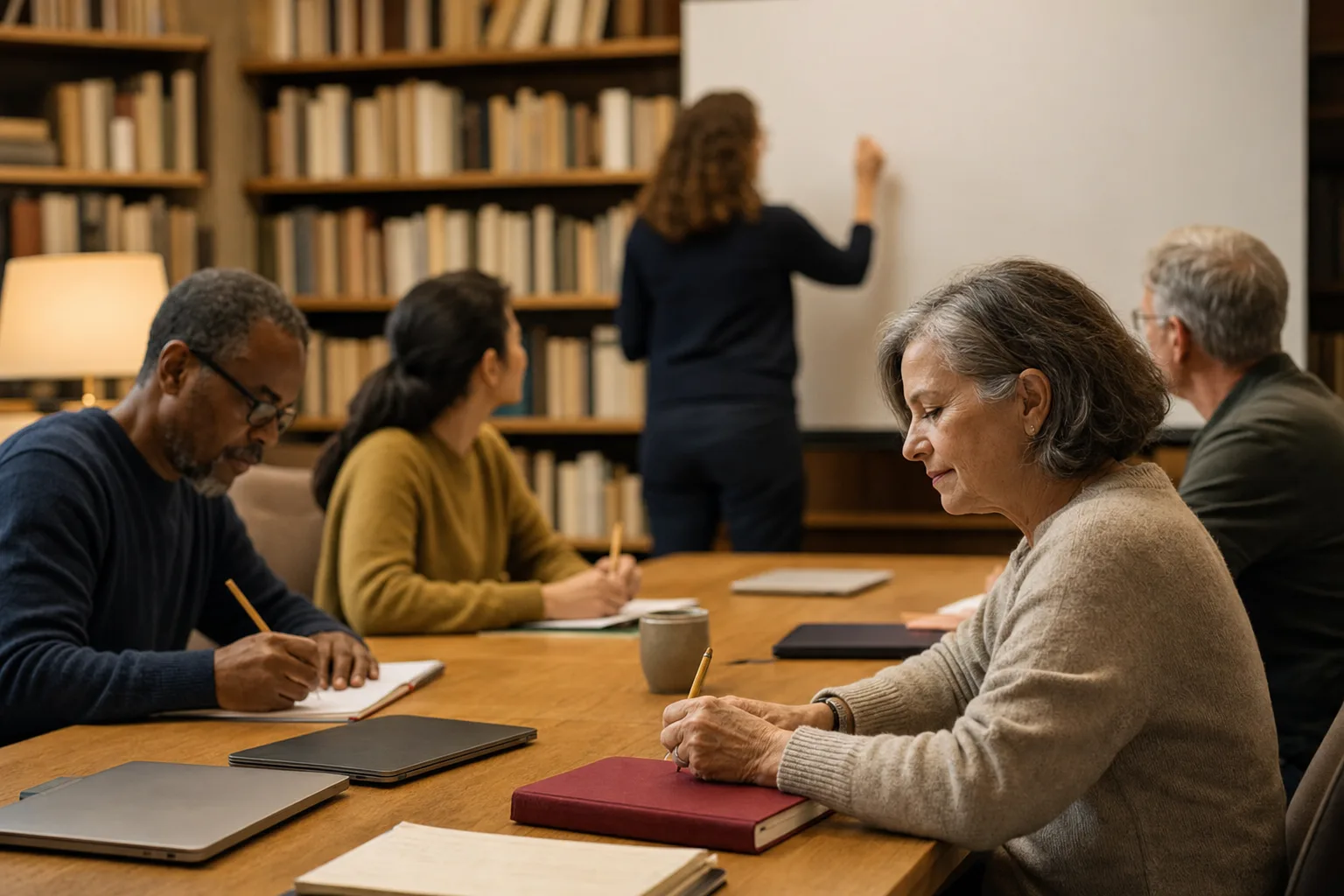
Who it is for
- Small business owners who do their own books, or want to understand what their bookkeeper does.
- New bookkeepers and office managers who need the fundamentals in one place.
- People starting a business or side business who want to set it up right from day one.
- Students and career changers who want a practical grounding before a formal accounting course.
No accounting background is needed. You need only basic arithmetic; every example shows its working.
What you will be able to do
- Record any everyday transaction as a balanced debit and credit.
- Set up a chart of accounts that maps to your tax return.
- Record sales, customer payments, bills and credit card purchases correctly.
- Reconcile a bank account and a credit card to the cent.
- Work through a pay run and a GST/HST or sales tax return with real 2026 figures.
- Read a profit and loss, a balance sheet and a cash flow statement, and see how they connect.
- Close a month and a year, and hand your accountant what they need.
Syllabus
Take the lessons in order the first time; each builds on the one before. Total time: about 2 hours (120 minutes of reading, plus the quizzes).
- What bookkeeping is, and why it mattersSay what bookkeeping is and how it differs from accounting.8 min
- The accounting equation and double entryState the accounting equation and explain each part.12 min
- The chart of accountsExplain what a chart of accounts is and how it is organized.10 min
- Cash basis and accrual basisExplain when income and expenses are recorded under each method.9 min
- Recording sales, invoices and customer paymentsChoose between a sales receipt and an invoice.11 min
- Recording expenses, bills and supplier paymentsChoose between recording an expense directly and entering a bill.11 min
- Bank and credit card reconciliationExplain why the bank balance and the book balance differ.11 min
- Payroll basics in the US and CanadaWork from gross pay to net pay for a US and a Canadian employee.12 min
- Sales tax, GST and HST basicsExplain why sales tax collected is a liability, not income.10 min
- Financial statements: P&L, balance sheet and cash flowBuild a profit and loss statement from a month of transactions.12 min
- Month-end and year-end closeWork through a month-end close checklist.8 min
- Choosing software and working with an accountantList the features a small business actually needs from accounting software.6 min
How it works
- Read the lesson. Each one starts with its learning goals and ends with the key terms, linked to our accounting glossary.
- Try it. Every lesson links to a free template or calculator so you can practise on your own numbers.
- Take the quiz. Three to five multiple-choice questions, with the right answer and an explanation as soon as you pick. Pass with three out of four (or four out of five).
- Get your certificate. Pass all 12 quizzes and print a certificate of completion with your name.
Your progress is saved in your own browser on this device only. Nothing is sent to us, and there is nothing to sign up for. If you clear your browser data you can simply take the quizzes again.
For teachers, libraries and small business centres
You are welcome to link to this course, or to any single lesson, from your website, a class page or a resource list. The lessons stand on their own, so you can assign, say, the reconciliation lesson before a workshop on month-end. The content is general information for the US and Canada, checked against IRS and CRA guidance and dated where figures change each year. If you spot an error or want a topic covered, tell us.
Questions
Is the course really free?
Yes. Every lesson, quiz and the certificate of completion are free, with no sign-up, no email address and no trial to start. Your quiz results are kept in your own browser.
Who is the course for?
Small business owners, new bookkeepers and office managers, people starting a side business, and students who want a practical grounding before a formal course. No accounting background is needed. Examples cover both the United States and Canada.
How long does it take?
About 2 hours in total. Each of the 12 lessons takes 6 to 12 minutes plus its quiz, so you can do one a day or the whole course in an afternoon.
Do I get a certificate?
When you have passed every lesson's quiz, you can print a certificate of completion with your name from AcboBooks. It records that you finished a free course; it is not an accreditation, a professional designation or academic credit.
Do I need accounting software?
No. Every example works on paper or in a spreadsheet, and the free templates linked from each lesson are enough to practise. If you want to try the steps in real software, each lesson says where to find them in AcboBooks, which has a free 15-day trial.
Can I use it with a class or link to it?
Yes, please do. Teachers, libraries and small business centres are welcome to link to the course or to any lesson. Each lesson stands on its own, so you can assign one at a time.
Related
- Small business accounting glossary
- Free bookkeeping templates
- Free calculators and tools
- Monthly closing checklist
Want to practise in real software? AcboBooks is Windows desktop accounting software for US and Canadian small businesses, with a free 15-day trial and sample companies to explore. The course does not require it.
Course provided by AcboBooks LLC. Last reviewed October 25, 2026. General information, not tax, legal or accounting advice; for decisions about your own business, talk to an accountant.