
Petty cash: how to set it up and record it properly
How to run a petty cash box with the imprest system: setting the float, vouchers, replenishment entries, cash over and short, and the monthly count.
6 min read · October 18, 2026
What petty cash is for
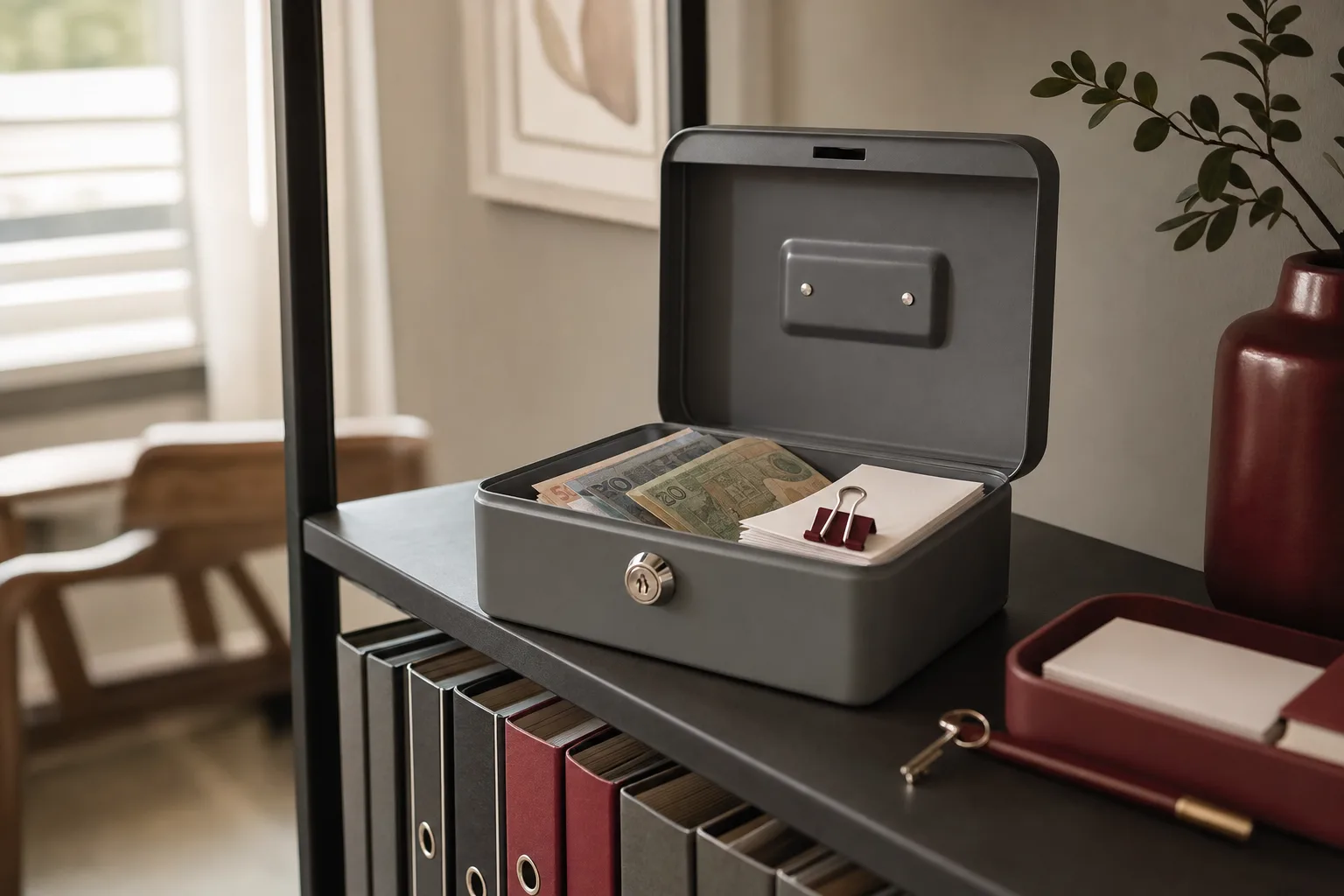
Petty cash is a small amount of cash kept on site for purchases too small for a cheque or card: postage, a parking meter, milk for the office, a courier tip. It is convenient, and that is the risk: cash with no paperwork disappears without anyone noticing.
The answer is the imprest system. The box always holds a fixed amount, called the float. At any moment, cash plus receipts in the box should add up to exactly that amount.
Setting up the box
- Pick a float that covers two to four weeks of small purchases. For most small offices that is $100 to $300.
- Name one custodian. One person holds the key and hands out cash. Shared boxes cannot be balanced, because nobody is responsible for a shortfall.
- Set a limit per purchase, for example $50. Anything bigger goes through normal bills or the business card.
- Create a Petty Cash account in the chart of accounts. It is a bank-type asset account, so it appears on the balance sheet with your other cash.
- Fund it with a cheque or withdrawal from the bank:
| Event | Debit | Credit |
|---|---|---|
| Start the box with $200 | Petty Cash $200 | Bank $200 |
Vouchers and receipts
Every time cash leaves the box, something goes in its place: a petty cash voucher (a slip showing date, amount, what it was for and who took it, signed by the person receiving the cash) with the store receipt attached.
- No receipt? The voucher alone, with a clear description, is still far better than nothing.
- Number the vouchers in order so a missing one stands out.
- Note the expense category on each, such as postage or office supplies. It makes the bookkeeping quick.
- Never put IOUs or personal loans in the box. They turn a cash fund into an informal bank.
Replenishing and the entries
When the cash runs low, or at month-end, total the vouchers by category and top the box back up to the float. Under the classic imprest method, the expenses are recorded at this point:
| Event | Debit | Credit |
|---|---|---|
| Box holds $38 cash and vouchers for postage $72, office supplies $55, meals $35. Write a $162 cheque to refill it | Postage $72; Office supplies $55; Meals $35 | Bank $162 |
The Petty Cash account itself stays at $200 throughout; only the expense accounts and the bank change. You only debit or credit Petty Cash again if you decide to change the float.
The other common method is to record each voucher as it happens, as a payment out of the Petty Cash account, and then refill the box with a transfer from the bank. The Petty Cash account then always shows the cash actually in the box. AcboBooks works this way: each slip is recorded against expense accounts and numbered in the register, and the box is refilled with a transfer. Both methods give the same profit and loss; pick one and stick to it.
When the box doesn't balance
Count the box at least monthly, and always before replenishing. Cash plus vouchers should equal the float. When it does not, the small difference goes to an expense account such as Cash Over and Short:
| Situation | Entry when refilling |
|---|---|
| Vouchers $162, cash $35: $3 short | Debit the expenses $162 and Cash Over and Short $3; credit Bank $165 |
| Vouchers $162, cash $40: $2 over | Debit the expenses $162; credit Cash Over and Short $2 and Bank $160 |
A few dollars now and then is normal: rounding, a coin dropped. The same shortfall month after month, or one large one, is a control problem to investigate, not an amount to book away.
Keep the vouchers with the month's records. Cash expenses need the same support as any other expense if the tax authorities ask, and a tidy petty cash file is part of a clean month-end close.
A petty cash box in your books
The AcboBooks Petty Cash screen keeps the box as its own account, records each slip against expense accounts, and refills it from the bank in one step.
This article is general information, not tax, legal or accounting advice. Rules and dates change; check the official source or ask your accountant before acting.
In this article